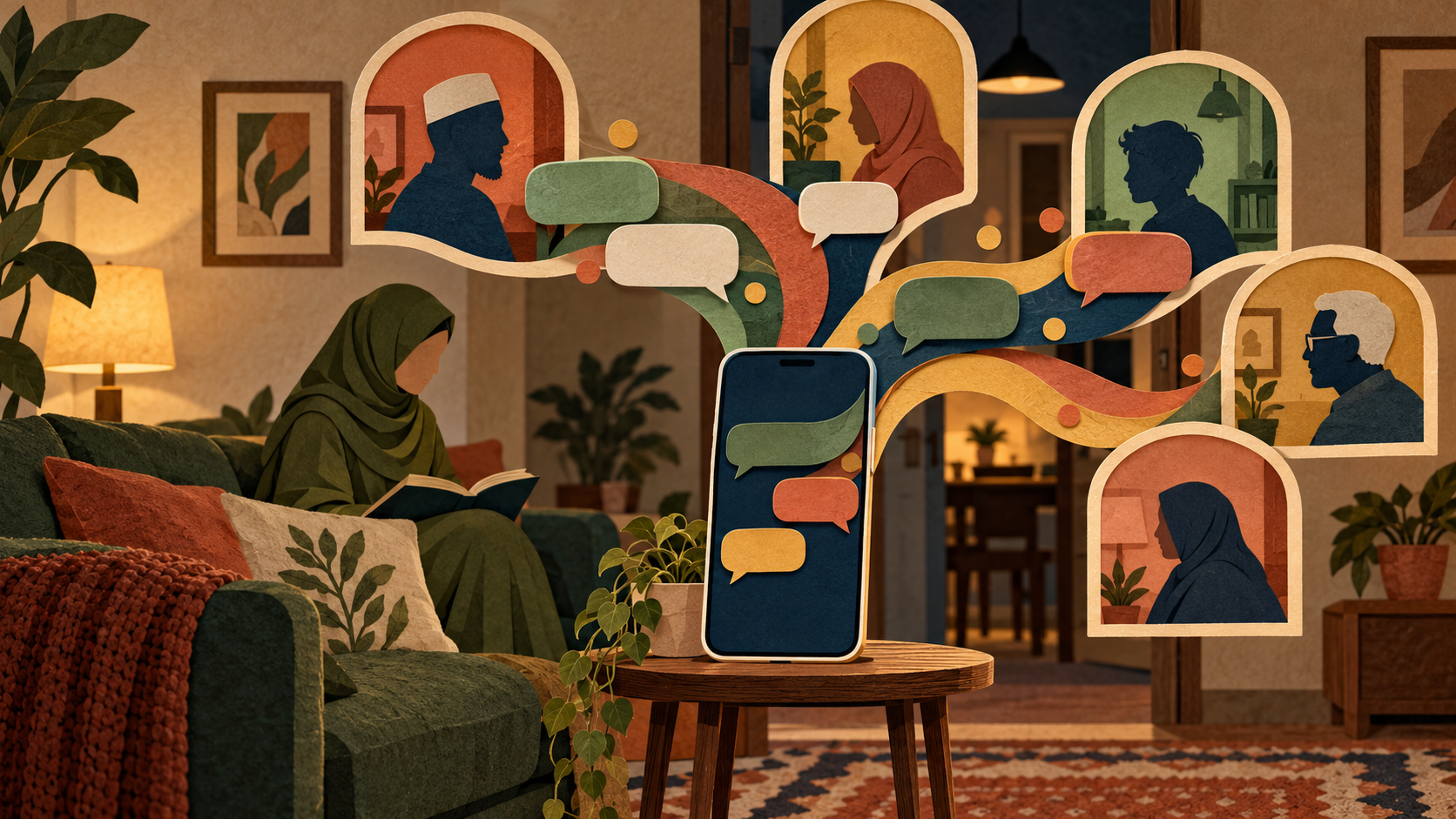



Moving to a new country, city or even neighbourhood can make a person unexpectedly lonely. You may meet people at school gates, work, the mosque or a community group—yet still feel that no one knows where you belong.
That feeling is not proof that you are unfriendly, ungrateful or incapable of settling. Belonging is not produced by adding contacts. It grows when repeated encounters become enough safety for real presence.
Acquaintance is not failure
Many adults expect friendship to happen as it did at university or in childhood: quickly, naturally and without planning. But adult life is divided by work, children, transport, language and family obligations. A friendly conversation may remain just that for a long time.
Especially for Arab and Muslim families living abroad, there can be a second pressure: the wish to find people who understand faith, food, language and family rhythms without needing constant explanation. That wish is legitimate. It does not mean that every good relationship must be identical to home.
Do not make one person carry the whole transition
When a family moves, one spouse can become the social organiser: finding schools, maintaining ties abroad, arranging invitations and making sure the children do not feel isolated. The other may be overwhelmed in a different way or retreat into work. Neither response automatically means a lack of care.
But if only one person carries the emotional map of the new place, resentment follows. Ask a practical question: “Which connection are you willing to take responsibility for this month?” It might be calling a relative, attending a regular activity, inviting one family for tea or simply protecting one evening without screens.
Build repetition before intimacy
Instead of searching for an immediate best friend, choose one setting that you can attend consistently. Arrive a little early. Learn two names. Ask one specific follow-up question next time. Suggest a small, low-pressure plan rather than a large social promise.
This is not a formula for forcing closeness. It is a way to give trust enough repeated evidence to grow. Friendship needs warmth, but it also needs reliability.
Faith can be a home, not a performance
For a Muslim living away from extended family, shared worship and ordinary hospitality can offer real continuity. Yet faith should not become a test that people must pass before they are treated with dignity. A good community makes room for different stages of language, practice and confidence while holding clear values of respect and responsibility.
When loneliness becomes more than transition
Persistent isolation that changes sleep, motivation, work or family life deserves attention. It may be part of an adjustment process, but it may also need professional support. Asking for help is not a rejection of patience or faith; it is one way of taking the strain seriously.
A move changes the map, not the human need for trustworthy company. Begin small, show up again, and let belonging become something built—not something you are supposed to prove you already feel.
Explore: More Insights and Consultation Services.
Related Posts

October 3, 2026
When Grandparents Live in Another Time Zone
Long-distance grandparents and grandchildren can build meaningful connection without forcing emotional performance. Practical ideas for…

October 3, 2026
When a Muslim Family Has Two Possible Homes
Relocation decisions in Muslim diaspora families involve more than preference: faith, ageing parents, children, marriage…
October 1, 2026
Long-Distance Grandparents Are Still Family
Practical ways to keep grandparents meaningfully present in family life across distance, without turning connection…

October 1, 2026
When Home Has One Culture and School Has Another
How families can help children navigate different home and school cultures with clarity, dignity and…