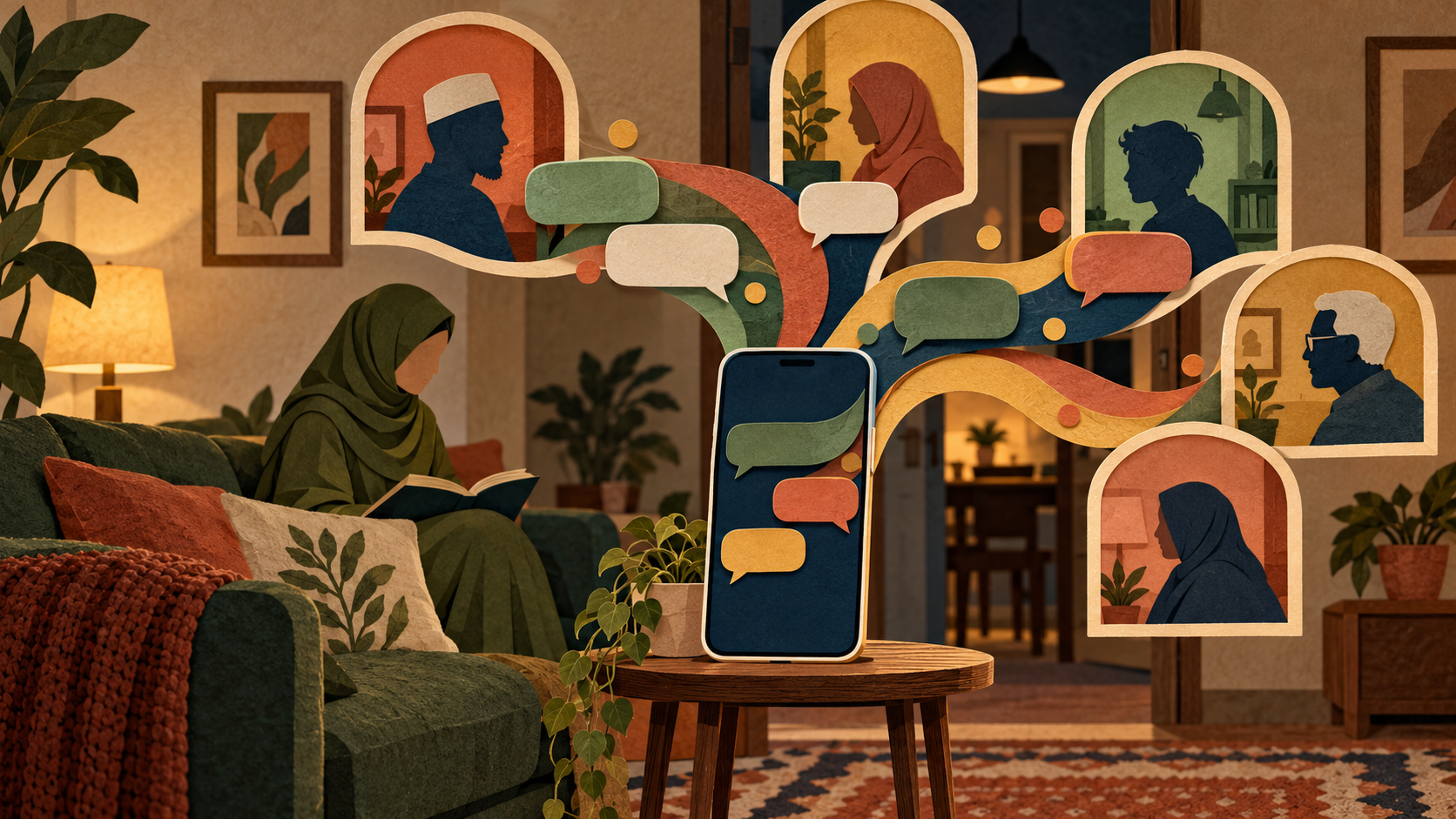



A child knows their grandparents through a screen.
They wave after Isha while their grandparents are beginning the day. They speak in rushed voice notes. They may love one another deeply, yet struggle to build the ordinary familiarity that grows from shared meals, school pickups and unplanned visits.
Distance does not erase kinship. But it changes how kinship must be practised.
Calls are not the same as connection
A weekly video call can become a performance:
“Say salam.”
“Show Grandma your drawing.”
“Tell Grandpa what you learned.”
The child may comply politely while feeling little ownership of the relationship.
The answer is not to force longer calls. It is to create small forms of continuity.
A grandparent can share a family story in short parts. A child can ask for a recipe, a dua they remember from childhood or a photo from a meaningful place. A grandparent can record a message for a school milestone rather than waiting for one formal annual call.
Do not make children carry adult grief
Parents may miss their own parents intensely. That grief is real.
But a child should not be told, “You do not care about your grandparents,” simply because they are not emotionally attached in the same way. Attachment needs repeated experience, and distance limits that experience.
The more helpful question is: “What kind of connection is possible for this child, at this age?”
The American Academy of Pediatrics encourages parents to know a child’s social world while staying involved without taking over. That same principle applies to extended-family ties: presence and guidance matter, but connection cannot be manufactured by pressure alone. HealthyChildren.org
Kinship is more than affection
In Islam, maintaining family ties is not reduced to feeling warm every moment. It includes respect, contact, service when needed and teaching children where they come from.
Yet it should not become a demand that the child perform emotion for adults.
A family can protect kinship by giving it rhythm: a regular call that suits both time zones, occasional private conversations as the child grows, shared family stories and clear opportunities for visits when possible.
The goal is not to recreate a nearby grandparent relationship through a screen. It is to build a truthful relationship that fits the distance without treating distance as indifference.
Related Posts

October 24, 2026
Friendship After a Move: Why Belonging Takes More Than Joining a Group
A new city can be full of people and still feel lonely. Learn how adults…

October 1, 2026
When Home Has One Culture and School Has Another
How families can help children navigate different home and school cultures with clarity, dignity and…

September 20, 2026
When School Values Conflict With Your Muslim Family’s Values
Muslim parents in the West may face school lessons that conflict with family beliefs. Learn…