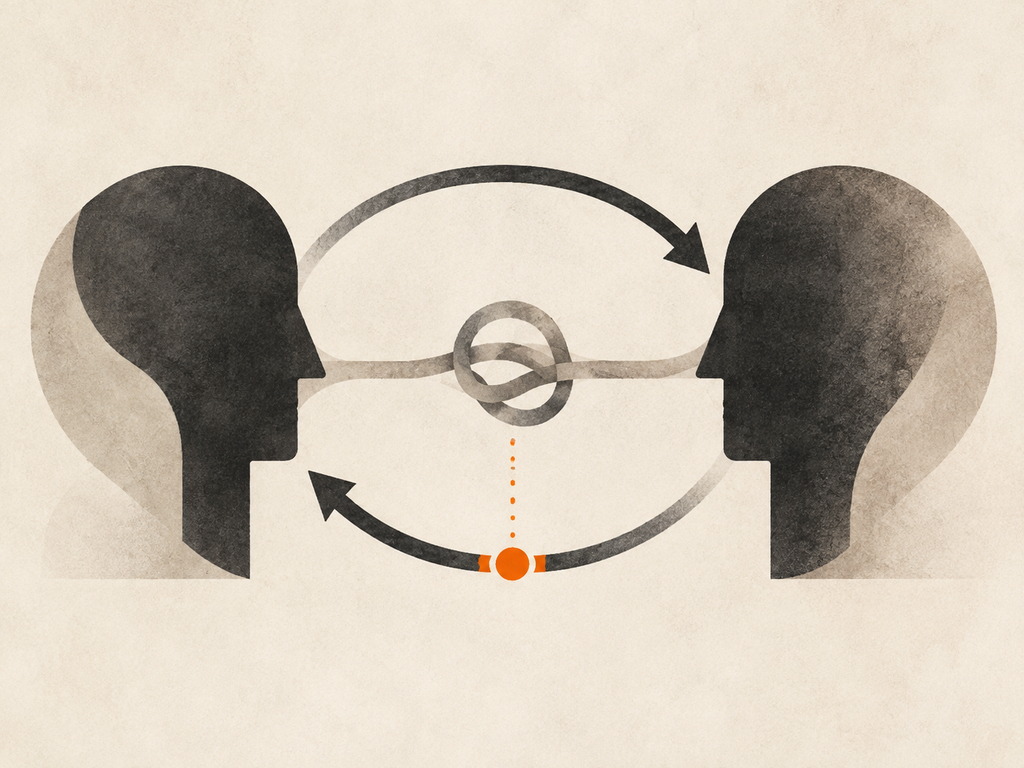


Compassion is not the same as carrying another adult’s emotional responsibilities.
A person may repeatedly calm a partner, repair every conflict, excuse every harmful reaction, and absorb consequences that do not belong to them. From the outside, this may look like patience. Internally, however, it may be driven by fear: “If I stop helping, everything will fall apart.”
Before and after the rescue
Before overfunctioning, there is often anxiety, guilt, or fear of rejection. The person steps in, explains, rescues, apologizes first, or prevents the partner from experiencing the natural consequences of their choices.
The immediate result is relief. The argument ends. The relationship survives another night.
The later result may be very different: exhaustion for one partner and less responsibility for the other. What initially protected the relationship can gradually preserve the very pattern that is damaging it.
Research on dyadic coping distinguishes supportive mutual coping from patterns in which responsibility becomes imbalanced. Healthy responsiveness requires awareness of the relationship, authenticity, and mutuality—not the disappearance of one person into the needs of the other. Review of dyadic coping research
Islamic ethics does not define mercy as helping every pattern continue. The Qur’an commands cooperation in goodness and righteousness, not cooperation in sin and transgression:
“Cooperate with one another in goodness and righteousness, and do not cooperate in sin and transgression.”
Qur’an 5:2
This principle asks not only, “Was my intention kind?” but also, “What did my kindness actually strengthen?”
Real compassion may soothe distress, but it may also require a clear limit. It can understand a partner’s fear without surrendering to manipulation, acknowledge pain without excusing harm, and offer support without taking over another adult’s duty to change.
After I help, does the other person become more capable and responsible—or do I become more necessary and exhausted?
Related Posts
أغسطس 23, 2026
من قال إن فهم النفس يعني تبرئة النفس؟
فهم الدافع وراء السلوك خطوة ضرورية، لكنه لا يلغي مسؤولية الإنسان عن أثره.

أغسطس 20, 2026
When Self-Awareness Turns Into Constant Self-Surveillance
Self-awareness is usually presented as an unquestionable good. Notice your feelings. Examine your patterns. Take…

أغسطس 20, 2026
When Keeping the Peace Means Carrying the Conflict Alone
Every family has moments when someone decides, “This is not worth another argument.” Sometimes that…