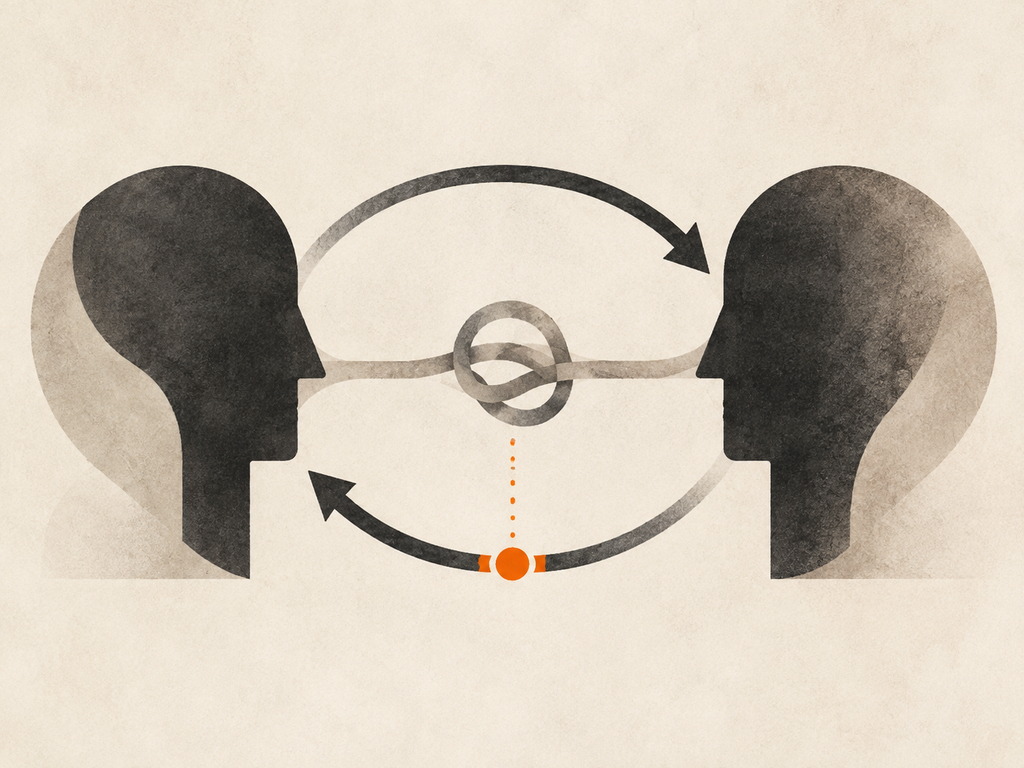


Not every compromise protects a marriage.
Some compromises are freely chosen acts of love. Others are repeated surrenders made to avoid anger, withdrawal, criticism, or rejection.
The calm that comes at a cost
Before the compromise, a person may feel anxious: “If I insist on what matters to me, the relationship may become unstable.” So they give up the preference, silence the objection, cancel the need, or accept a decision they did not truly participate in.
The immediate effect is calm. No argument happens. The later effect may be emotional absence. One partner remains physically present but becomes increasingly invisible inside the relationship.
Research suggests that sacrifice is not experienced in the same way under all conditions. Partner responsiveness can influence whether sacrifice is perceived as meaningful or costly, while authenticity and mutuality remain important to relational well-being. Research on responsiveness and sacrifice · Systematic review
Islam does not build marriage on a permanent victory of one will over another. The Qur’an describes marriage through tranquillity, affection, and mercy:
“He created for you spouses from among yourselves so that you may find tranquillity in them, and He placed between you affection and mercy.”
Qur’an 30:21
Mercy includes sacrifice, but it cannot mean that only one person is always required to disappear. Tranquillity is not merely the absence of arguments; sometimes a home is quiet because one person has concluded that speaking is useless.
What healthy compromise looks like
- Both partners can speak without punishment.
- The cost does not always fall on the same person.
- The decision protects the relationship without erasing either spouse.
The real test of compromise is not whether it ended today’s disagreement. It is whether both partners can still recognize themselves—and each other—after years of making such decisions.
Related Posts

أغسطس 23, 2026
When Compassion Becomes Emotional Overfunctioning
Care becomes unhealthy when one person repeatedly carries emotional responsibilities that belong to another adult.
أغسطس 23, 2026
من قال إن فهم النفس يعني تبرئة النفس؟
فهم الدافع وراء السلوك خطوة ضرورية، لكنه لا يلغي مسؤولية الإنسان عن أثره.

أغسطس 20, 2026
When Self-Awareness Turns Into Constant Self-Surveillance
Self-awareness is usually presented as an unquestionable good. Notice your feelings. Examine your patterns. Take…

أغسطس 20, 2026
When Keeping the Peace Means Carrying the Conflict Alone
Every family has moments when someone decides, “This is not worth another argument.” Sometimes that…