


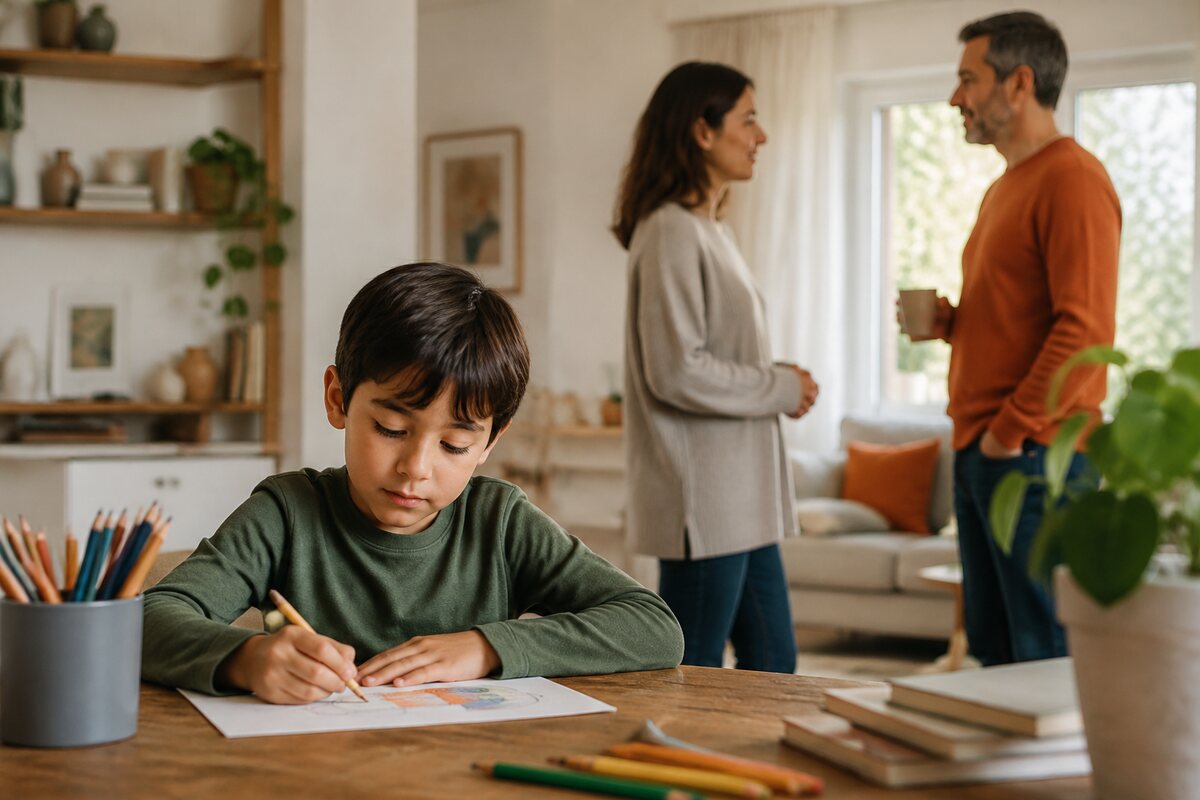
Some parents believe that children are protected from marital tension as long as they do not witness a loud argument.
Avoiding shouting in front of children is important. Yet conflict is communicated through more than volume. A child may notice prolonged silence, sarcastic comments, doors closing, sudden changes in routine, or one parent repeatedly speaking through the child instead of addressing the other.
Children do not always understand what the tension means. Without clear information, they may create their own explanation: “Maybe this happened because of me,” or “I need to behave perfectly so everyone stays calm.”
This does not mean parents must pretend to be happy. A perfectly harmonious family is neither realistic nor necessary. Children can benefit from seeing that disagreement does not automatically destroy a relationship.
What matters is how conflict is managed.
A child who sees respectful disagreement can learn that people may be upset and still remain safe. A brief explanation can also reduce confusion: “We are having a disagreement, but it is an adult matter, and it is not your fault.”
Parents should avoid recruiting children as messengers, witnesses, or judges. Asking a child to confirm who was right places them inside a conflict they cannot resolve. So does sharing adult details in order to gain the child’s sympathy.
Repair is valuable too. If a child witnessed an argument, parents do not have to behave as though nothing happened. They can acknowledge that the conversation became too tense and explain that adults are responsible for managing their emotions.
A practical step: after conflict, check the child’s experience with a simple, age-appropriate question: “You may have noticed that we were upset. How did that feel for you?” Listen without asking the child to take sides.
Protecting children does not require concealing every difficult emotion. It requires keeping adult responsibility with adults, preserving the child’s sense of security, and showing that relationships can return to respectful communication after strain.
When conflict is frequent, frightening, or difficult to contain, family consultation may help parents develop a safer approach before the child becomes responsible for managing the emotional climate.
Post a comment
Related Posts

August 20, 2026
When Self-Awareness Turns Into Constant Self-Surveillance
Self-awareness is usually presented as an unquestionable good. Notice your feelings. Examine your patterns. Take…

August 20, 2026
When Keeping the Peace Means Carrying the Conflict Alone
Every family has moments when someone decides, “This is not worth another argument.” Sometimes that…

August 20, 2026
The Resentment Beneath “I Don’t Mind”
“I don’t mind” can be an honest answer. It can also become a quiet way…

August 15, 2026
Why Rest Can Feel Unsafe After Years of Survival Mode
Rest sounds simple until the body finally has permission to stop. For someone who has…